Written by Colin Mac
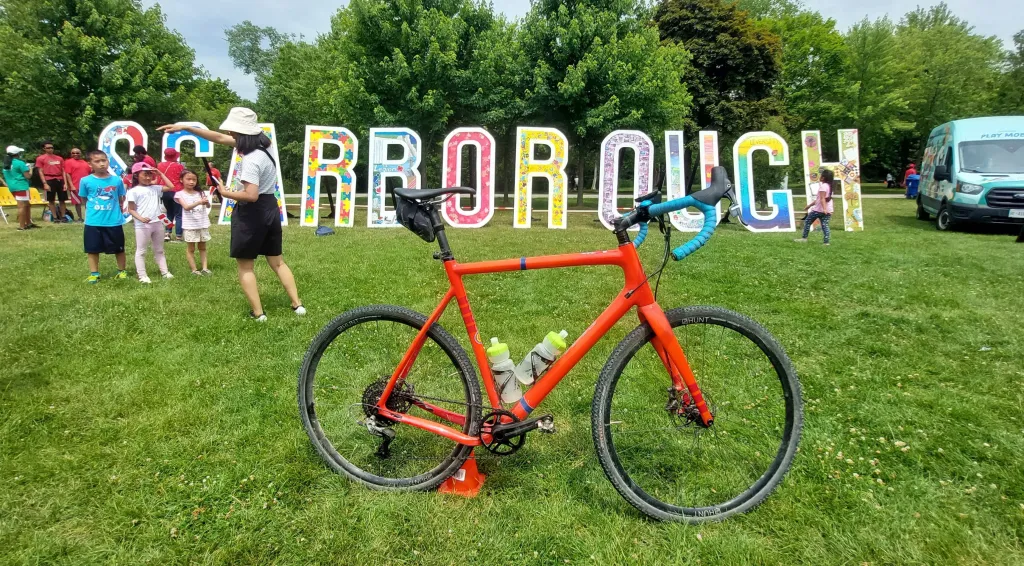
Every cyclist has their favourite ride. Mine is a local ride I call the South Scarborough Loop. It winds its way past many of my childhood haunts, and even past the house were I grew up (along with the hospital where I was born…and my elementary school…and my high school…). It passes ancient portages and trails, and skirts a good bit of my city’s history. For me, the route was a lifetime in the making, and much of it is the same stuff I rode as a kid on my first BMX.
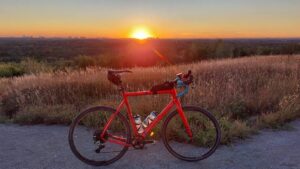
The SSL is as much a part of me as I am of it.
And when I ride, if I listen carefully, I swear I can hear the echoes of its history. Our shared history.
Connection.
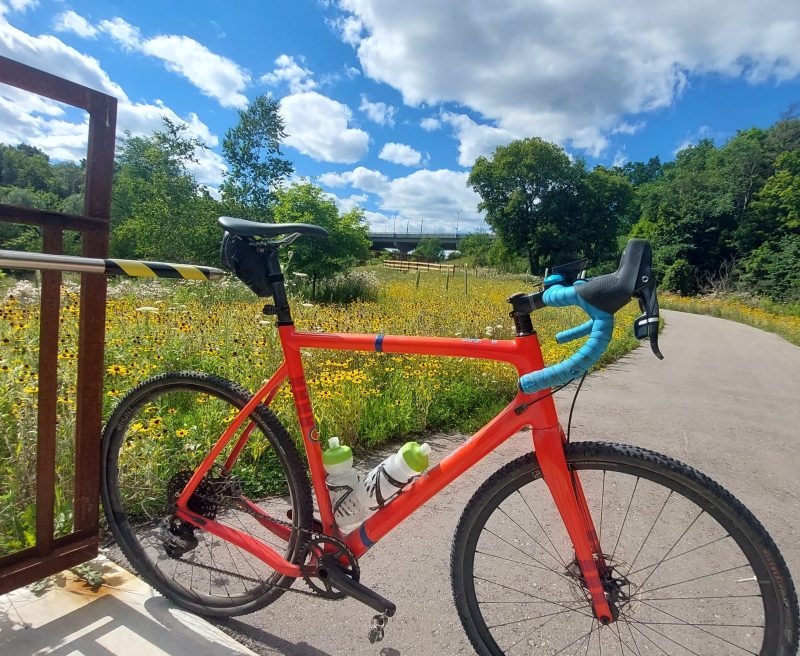
My ride starts on the north shore of Highland Creek, where a village that was inhabited by early Iroquoians once stood. It follows Highland Creek through to Morningside Park and UTSC, and then it veers up to the Zoo. There it climbs Beare Hill Park, then travels down to Lake Ontario through Colonel Danforth Park, and east to Rouge Beach, where it turns around and heads back home, The route parallels the top of the Bluffs, rides through the mystical Guild Inn, and finally dips down to the Waterfront Trail, where it passes a 100 year old shipwreck before grinding up Gates Gully, an old smuggling route, for a last sprint home.
My ride–my experience–ends in a moment of reflection on top of Taber Hill, an ossuary that contains the bones of the same inhabitants who once lived near the start of my ride. Standing atop the burial mound, with the city sprawling in front of me, I feel a deep connection to the people and history of the place I call home.
Responsibility.
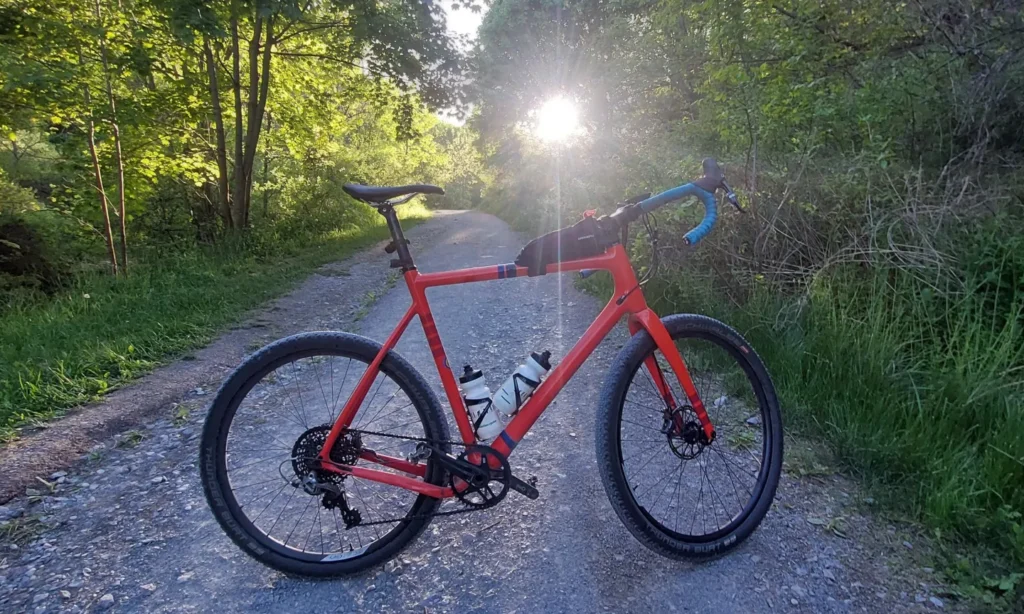
Gratitude is an important part of my ethos. I feel it when I watch the sun drop below the horizon; I feel it in the breeze when I ride along the water’s edge; and I feel it when I connect with my fellow cyclists, my students, and my family and friends. Also, by extension, I feel it for the people who have cared for these lands and waters since time immemorial. 
Land Acknowledgements are as simple as that for me. We ride as one: those who were here before me, those who are here with me now, and those who will come after me.
Acknowledgement.
Yes, acknowledgement. That’s where this post has been leading since the first words. This post is my way of acknowledging and honouring that I’m part of something bigger than a bike ride or my home, something older than Confederation, and even something greater than the sum of my experiences
It’s for these reasons I recognize, celebrate, and commemorate the enduring presence of all First Nations, Métis and Inuit peoples, and thank them for their stewardship of the lands and waterways. I live, breathe, and ride, on the lands of the Mississaugas of the Anishinaabe, the Haudenosaunee Confederacy and the Wendat.
Miigwetch.
Maybe I’m Not Getting it Right?
I’ve spent over a decade in my teaching and personal life exploring the impact of the residential school system not simply on generations of Indigenous communities, but on the fabric of our country, and that’s the starting point for how I’m framing this post. Acknowledging the land is a first step–a small step–in understanding the intent of the spark lit by the Honourable Justice Murray Sinclair and the Truth and Reconciliation Commission.
And yeah, maybe I’m not even getting it right, but I’m finding connections, learning a broader history, and expanding my ideas of where I fit in the world. We Ride as One.
What About Your RIdes?
For me, an authentic Land Acknowledgement consists of three components: an introduction that explores the history of the people who lived here before you; an acknowledgement of the treaties connected to the lands and waters; and a closing that connects you to a ride, route, or event. These can come in any order, and to any degree to which you find comfort. I think the goal is simply to grow.
There are endless online resources to support. RIght now, I like this one.
Btw, in my other life, I’m a teacher, and using my school board’s official version as a foundation, I write a different Land Acknowledgement for every day of the year. Click here to read what I do to expand TRC at my school.
Acknowledging the Land Around the Province
Here are some of the Land Acknowledgements I’ve written for races and organizations around the province:
Mansfield Outdoor Center and the People Among the Hills
The trails in this forest reside within treaty lands, and the area we are standing on, at what we now call Mansfield Outdoor Education Centre, in Dufferin County, is located on the traditional territory of: the Tionontati, the Attawandaron, the Anishnabee, and the Haudenosaunee peoples.
To some they were known as “the people among the hills”, and as you ride among these hills today, we hope you will honour, celebrate, and commemorate the enduring legacy of those who inhabited and cared for these lands and waterways since Time Immemorial, and who continue to care for its resources.
We recognize this, and hold a shared obligation to ensure the land is appreciated as it is, and left as it was when we came, for those who will come long after us.
Finally, many of the people who lived here before spoke the language of the Huron. In that language, “tiawenhk” (tea-ah wenkh) means “thank you”. I am thankful you are here today, and thankful for the gifts of Turtle Island.
Ride safe today.
Tiawenhk.
Mountainview Ski Hill and the Huron-Wendat Nation
Welcome to Mountainview Ski Hill. Before we race today, I’d like to take a moment to reflect.
The land we’re standing on, and the town of Midland, is located on treaty land. It’s home to a large and diverse community of Indigenous peoples, and has been the home of the Huron-Wendat Nation and of the Anishinaabek people, since Time Immemorial.
Our place here is a gift, and I commit to deepening my understanding of the legacy of colonization and the impacts of marginalization, and I’ll do my best to ensure the land is appreciated as it is, and left as it was when we came.
In the language of the Huron people, tiawenkh (tea-ah-wank) means thank you. Tiawenkh to you for coming today, and tiawenkh to the town of Midland and to Mountainview Ski Hill for hosting us.
Ride safe.
MTB Kingston and the Crawford Purchase of 1783
Before we race today, I recognize the place we are standing on at MTB Kingston, in the community of Glenburnie, has been the site of human activity for many thousands of years, and is located on the traditional lands of the Anishinaabe, Haudenosaunee and the Huron-Wendat,
A Story About the Williams Treaties and Trail Hub.
Starting in the 1840s, the Anishinaabe Chippewa of Simcoe, and the Anishinaabe Michi Saagig (mitch-a saw-geeg) of the north shore of Lake Ontario, began talks with the government. They were asking the Crown to respect the lands, and their ability to hunt, fish, and trap on them without settler interference.
At that time, this land was unceded territory–it was not legally given to the Crown through treaty or agreement.
Over the next 60 years, the lands and waters–that had been lived on and cared for by First Nations peoples since Time Immemorial–were used illegally by settlers under the premise of colonization, and in 1923 First Nations leaders formally met with the representative of the Crown, Angus Seymour Williams.
With this statement, we recognize, honour, celebrate, and commemorate the enduring presence of the many First Nations, Inuit, and Métis peoples who have been caretakers of these lands and waters for many thousands of years, and who continue to remain vigilant over their health and integrity.
More important, as a cycling club and organization based in Toronto (traditional territory of many nations including the Mississaugas of the Credit, the Anishnabeg, the Chippewa, the Haudenosaunee and the Wendat peoples), we acknowledge the roads and trails that will host us, reside within treaty lands.
As a community of cyclists, our place here is a gift, and our shared obligation will ensure the land is left as it was when we came.
We are all Treaty People.
Pam Julian, OCT President
I am writing this email from Picton, Ontario which is situated in the traditional territory of the Anishinaabe, Huron-Wendat and Haudenosaunee people. The land that we preside on today lies in unceded Indigenous territory. Our catchment area is adjacent to the Tyendinaga Mohawk Territory to our east, and the Kijicho Manito Madaouskarini Algonquin First Nation to our north. Ontario Cycling Association extends our deepest respect to all First Nations, Inuit and Métis peoples for their valuable past and present contributions to this land.
Teagan Hughes and the OCA
I am writing this email from Milton, which is located on the traditional territories of the Anishinabek, Huron-Wendat, Haudenosaunee and Ojibway/Chippewa peoples; the land that is home to the Metis; and most recently, the territory of the Mississaugas of the Credit First Nation who are direct descendants of the Mississaugas of the Credit peoples. Ontario Cycling Association extends our deepest respect to all First Nations, Inuit and Métis peoples for their valuable past and present contributions to this land.

Resources
- https://indigenoustourismontario.ca/about-ito/resources/land-acknowledgement/
- https://www2.gov.bc.ca/assets/gov/british-columbians-our-governments/indigenous-people/aboriginal-peoples-documents/calls_to_action_english2.pdf
- https://www.trentu.ca/teaching/how-do-land-acknowledgment
- https://www.amnesty.ca/blog/activism-skills-land-and-territory-acknowledgement/
- https://nativegov.org/a-guide-to-indigenous-land-acknowledgment/
- https://www.ualberta.ca/centre-for-teaching-and-learning/teaching-support/indigenization/land-acknowledgements.html
- https://www.toronto.ca/wp-content/uploads/2019/06/90c6-2019-Land-Acknowledgment-Guidance.pdf
- https://www.rcaanc-cirnac.gc.ca/eng/1100100028574/1529354437231
- https://www.canadashistory.ca/explore/settlement-immigration/the-numbered-treaties
- https://www.afn.ca/wp-content/uploads/2018/02/18-01-22-Dismantling-the-Doctrine-of-Discovery-EN.pdf
- https://www.un.org/press/en/2012/hr5088.doc.htm
 About the Author:
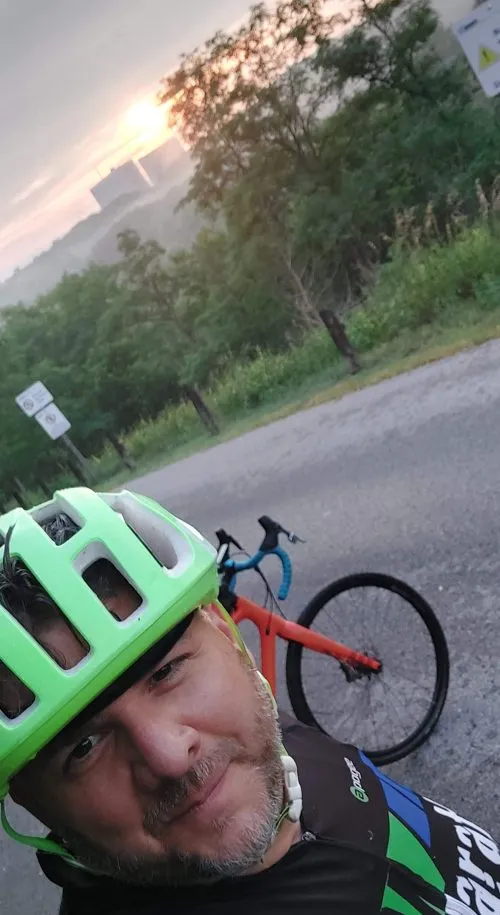
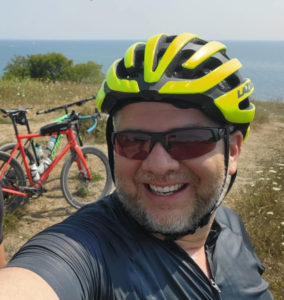
I am a 50 year old father of two. I know, right? Half a century. I work full time, try to parent as much as possible, and I ride as much as I can. These days, it seems I ride gravel more often (an Ibis Hakka), but MTB has my heart, and when I ride a mountain bike, it’s usually my Trek single speed (which is currently being warrantied for a broken frame), or my Norco Revolver (with gears).
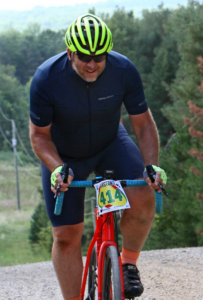
I live in Toronto, Ontario, and when there’s a race, I do it. I’ve always had a bike, but I only started RIDING about ten years ago. Cycling (and writing about it) has changed every aspect of my life. I’m writing this blog because a few good friends suggested I share my cycling journey. I’m not sure where it’s going, or who reads it, but I gotta say it’s been one heck of a ride. View all posts by teamcolinblog