



Overview

Disciplines:

GRAVEL

Gravel cycling is a dynamic and adventurous style of riding that blends elements of road cycling and mountain biking. It takes place on a variety of surfaces—ranging from gravel roads and forest trails to rugged singletrack and everything in between. This versatile discipline invites riders to explore unpaved paths, remote backroads, and natural terrain, offering a unique mix of endurance, exploration, and technical challenge.

BMX

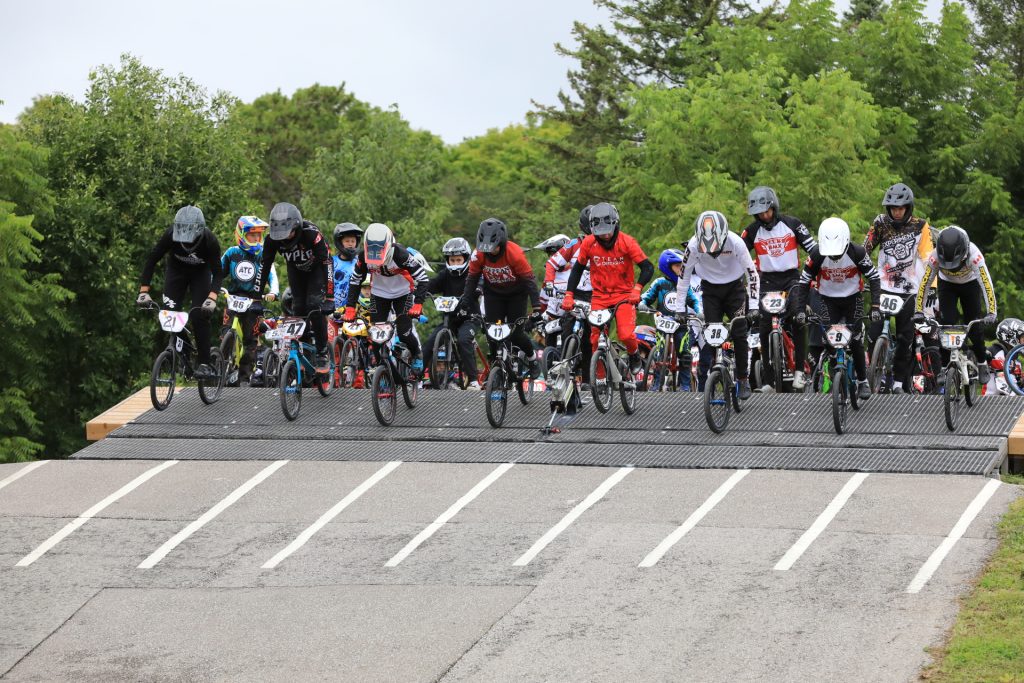
BMX comes in several exciting forms, with the two most popular being BMX Racing and BMX Freestyle. MX Racing is a high-speed competition held on dirt tracks featuring rollers, jumps, and sharp turns that test riders’ speed, control, and technical skill. Freestyle BMX, on the other hand, is all about creativity and style. Instead of racing, riders perform choreographed two-minute runs filled with tricks and stunts on ramps, walls, box jumps, and spines throughout a skatepark-style course.

PARA

Para-cycling is open to athletes with a range of physical impairments, including spinal cord injuries, amputations, cerebral palsy, visual impairments, and other neuromuscular conditions. Competitors use specialized equipment such as handcycles, tricycles, tandems, and C-Class bicycles to participate in a variety of road and track events. These adaptive formats ensure that athletes of all abilities can showcase their strength, skill, and determination in a competitive cycling environment.

ROAD

Road cycling features a variety of race formats, with the most iconic being mass start road races. These team-oriented events typically take place on public roads and can follow a point-to-point route or consist of multiple laps around a circuit. A support caravan travels behind the peloton, including race officials, medical staff, and neutral service vehicles to assist riders as needed.
 
In addition to road races, the discipline includes:
  • Individual Time Trials (ITT) – where cyclists race solo against the clock.
  • Criteriums – fast-paced races held on short, closed circuits, often in urban settings.
  • Stage Races – multi-day events combining various race formats, including road stages and time trials, with cumulative timing determining the overall winner.
 
Road cycling demands strategy, endurance, and teamwork, making it one of the most dynamic and tactical forms of competitive cycling.

MOUNTAIN BIKE

Mountain biking (MTB) is divided into several sub-disciplines, with the most prominent being Cross-Country (XC), Enduro, and Downhill (DH). In Ontario, Cross-Country is the primary focus for both event organizers and riders, thanks to the province’s terrain.
 
Within XC, there are three main race formats:
  • XCO (Cross-Country Olympic): Riders compete in mass start races lasting 1 to 1.5 hours, completing multiple laps of a 4–6 km circuit for a total distance of 20–30 km.
  • XCC (Cross-Country Short Track): A fast-paced, 20-minute race on a 1–2 km mostly double-track course designed to encourage passing and tight competition.
  • XCM (Cross-Country Marathon): Endurance-focused events lasting 3 to 6 hours, covering 60–160 km. These races can be point-to-point or consist of multiple laps.
 
Each format offers a unique challenge, from technical short bursts to long-distance endurance, making MTB a diverse and thrilling discipline for riders of all levels.

CYCLO-CROSS

Cyclo-Cross (CX) is a unique cycling discipline that blends elements of road cycling, mountain biking, and cross-country running. Races are held in the fall and winter, typically on short 2–4 km circuits featuring a mix of terrain—pavement, dirt trails, grass, steep hills, and man-made obstacles that often require riders to dismount and carry their bikes.
 
The sport is known for its challenging conditions, with races frequently taking place in rain, snow, wind, and mud. Events are fast-paced and spectator-friendly, as riders complete laps every 6–8 minutes on compact, winding courses in open areas. Races are short and intense, usually lasting no more than one hour.
 
In North America, the CX season runs from September to November, while European racing continues into the new year due to milder winter climates. Because of the seasonal overlap, rider categories at sanctioned events are based on their age as of December 31st of the following year.

TRACK

Track cycling is one of the most spectator-friendly disciplines in the sport, taking place on steeply banked oval tracks known as velodromes. Its fast-paced nature and close proximity to the action make it thrilling to watch.
 
The discipline features a wide variety of events that showcase both sprint and endurance skills. Riders compete individually or in teams across formats that include mass-start races, tactical duels, and time-based challenges. From explosive sprints to strategic team pursuits, track cycling offers a dynamic blend of speed, precision, and excitement.

Haven't Raced Before?

Sanctioned vs Unsanctioned

What’s The Difference & Why Does it Matter?

There are many exciting events available to cyclists in Ontario, across all disciplines and levels. While many of these events are well organized and safe, it is still important to educate yourself on the level of risk while participating in these events. From local cycling club events to large scale events, it is important to understand your coverage from an insurance standpoint, but also know that the event you are attending is utilizing industry best practices.  

OC Sanctioned Events

Events sanctioned by Ontario Cycling (OC) follow the OC Technical Guidelines that are reviewed and updated each year according to industry best practices. The Technical Guidelines are created in collaboration with the OC Team, OC Officials Committee, and discipline specific experts, to ensure a safe and positive event experience for participants. OC Sanctioned Events must follow the Technical Guidelines for their specific discipline in order to be sanctioned by Ontario Cycling. 

OC Sanctioned Club activity

If you are a holder of a 2025 OC Community Membership, your Membership insurance covers you only when you are participating in an OC Affiliated Club Sanctioned Activity. This activity would be provided in advance to the OC on the Affiliated Club Activity document. If you have any questions on whether your Club Activity is sanctioned with Ontario Cycling, please contact your club contact directly.

 
Unsanctioned Event

If a 2025 Member of the OC participates in a Unsanctioned Event, it is important to know that their 2025 OC Membership, whether it is a Community Membership, Provincial Race License or Ontario issued UCI License insurance, does not cover them at that event. It is the Members’ responsibility to review the registration of the unsanctioned event to see what insurance, if any, is provided for the rider.  Know your coverage before you register and understand the risks to participating in events where you have no coverage. Many events have liability coverage for the venue or event company, but do not offer liability coverage to the riders participating at the event. It is also important to note that if there is liability coverage offered for riders, it does not include Sport Accident Coverage.