
Katanya Polimis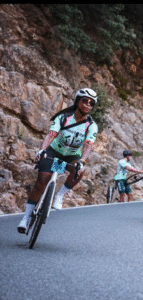
How long have you been cycling?
This year will make 16 years that I have been cycling.
How did you get into cycling?
My brother actually introduced me to cycling. He had just tried mountain biking and thought I would enjoy it as much as he did. After a few prompts, I gave it a try and he was right. I quickly fell in love with mountain biking, an over the years I explored several different types of cycling. Eventually, I settled into and fully embraced road cycling.
What cycling club or team do you ride with?
I ride with several clubs that overlap in different ways: CycleOG, Melanin Cycling Squad, D’ornellas Cycling Club, and Gyaldem Cycling Collective. I ride with multiple clubs because I have different reasons for riding, and each one offers a unique experience that I truly value.
Where is your favourite place to ride?
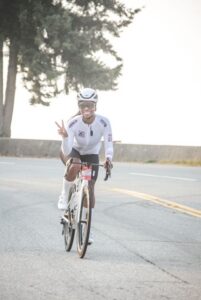
Anywhere my two wheels are turning in ultimately my favourite place. Cycling represents freedom to me. In recent years, I’ve especially enjoyed traveling with my bike to explore new tarmac in international destinations, participating in Gran Fondos and connecting with like-minded cyclists around the world.
What does being a Black cyclist mean to you?
So many things. Cycling means community, freedom, excellence, and joy. It’s about choosing health and skill, and embracing all the ways those values show up for me in each moment. While Black cyclists have always existed in this space in undeniably impactful and historic ways, we are often treated as the “new kid” here. For me, that means being visible without letting that visibility shrink me. Taking up space without getting lost in it. Being a Black cyclist is about claiming the space and freedom cycling affords, confidently and own my own terms, while also making room for the next Black Cyclist.
How has community played a role in your experience as a cyclist?
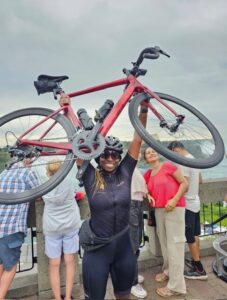
Cycling cannot exist without community for me, without it the journey would end far too soon. Cycling is deeply tied to belonging, and belonging cannot be fostered without community: a community that encourages, inspires, and holds one another accountable, all while striving toward goals and enjoying everything cycling has to offer. When a community is built thoughtfully, it becomes a space where people can show up as their full selves, comfortably and confidently. That’s how cyclists truly thrive. This is why I joined the Gender Equity Committee with Ontario Cycling: to help foster and promote these kinds of communities within the cycling space.
What does Black History Month mean to you personally?
Black History Month is an opportunity to reflect, recognize, remember, and most importantly, amplify the stories, values, and shared lessons that have been passed down. This work should not be limited to just one month. BHM serves as a reminder of the ongoing need to invest in Black futures by creating space, opportunity, and access to resources, so those who come next can thrive unapologetically as themselves.
 What changes would you like to see in cycling to make it more inclusive and accessible?
Investment. A focused and intentional commitment to access, safety, and leadership is the best place to start. This means removing financial and systemic barriers and genuinely listening to the concerns of those we seek to amplify. doing so helps create pathways for cyclists to lead, shape, and grow the sport in meaningful ways, while actively challenging elitism and the idea that there is only “one right way” to cycle. Championing respect for different riding styles, personal preferences, and equipment choices is essential to making the sport more inclusive allowing all cyclists to show up fully as themselves, without feeling the need to compare or measure themselves against others.